
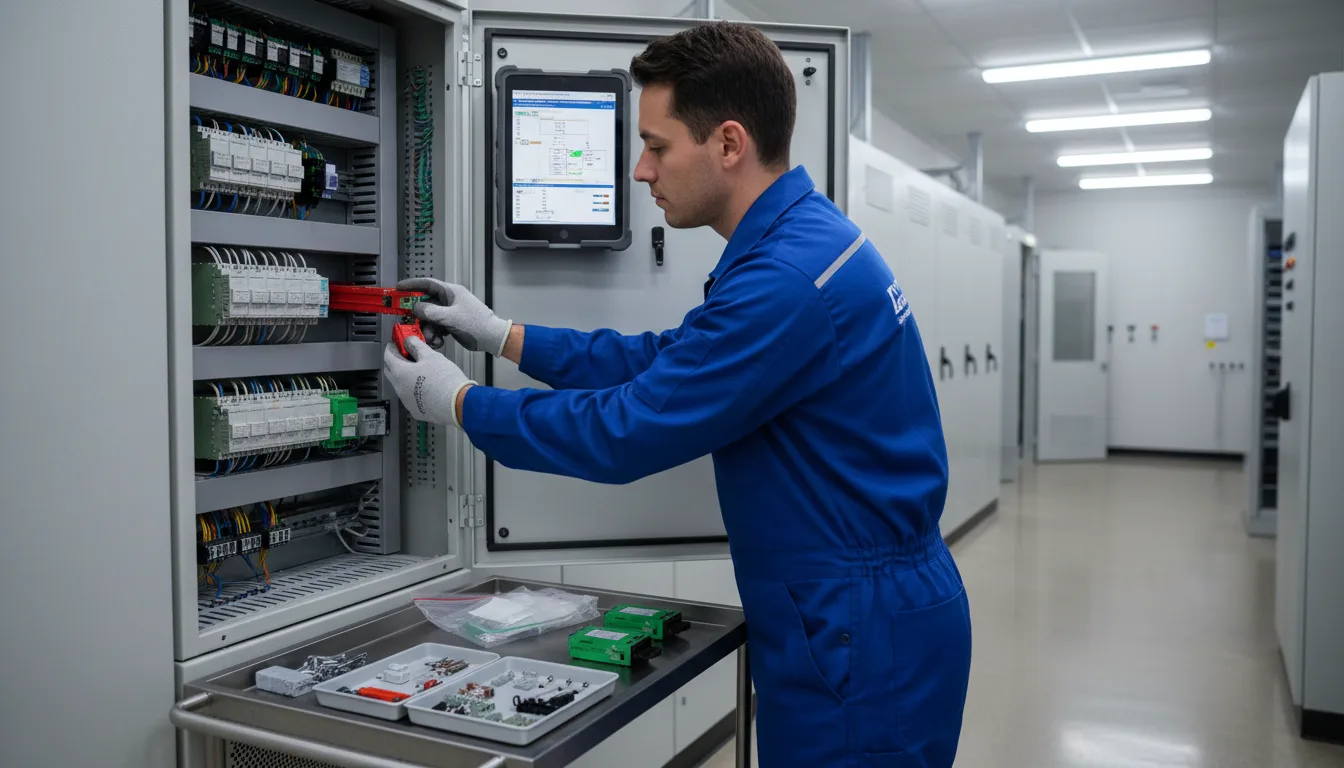
Unplanned downtime in automation systems represents one of the most costly operational risks disrupting production processes. A data-driven maintenance strategy makes it possible to anticipate these stoppages and systematically eliminate the majority of them.
The first and most critical step in a maintenance strategy is clarifying the critical asset inventory. Which equipment, if it fails, halts production or causes quality loss? The answer to this question determines which systems receive priority resource allocation.
Alarm frequency analysis provides powerful clues about fault root causes. Continuously repeating alarms from a specific piece of equipment point to either incorrectly set thresholds or an underlying mechanical or electrical deterioration—both conditions requiring early intervention.
Spare-part lead times are the hidden yet critical determinant of delays in maintenance processes. Spare parts inventory and supply chain strategy for critical assets must be directly linked to MTTR (Mean Time to Repair) targets; otherwise, a deep gap opens between technical capacity and operational reality.
Trend data obtained from SCADA and monitoring systems forms the data foundation of predictive maintenance strategies. Anomalies in vibration, temperature and current trends typically signal an impending failure weeks in advance.
A quality maintenance playbook does not simply contain technical instructions—it creates consistent decision quality across shift teams. Which symptom triggers which intervention? Whose authority covers the response? Without clear answers in the playbook, human-factor errors are inevitable.
As automation systems evolve, maintenance approaches must evolve with them. At Hermes Technology, we design the systems we deploy not only for the commissioning moment, but for the full operational lifecycle.